Why Tokenization in Payments is Making Card Numbers Obsolete
Still storing raw card data? Tokenization replaces sensitive numbers with secure tokens—cutting fraud, reducing PCI scope, and making old-school card storage a thing of the past.
How Data Shapes Checkout Personalization
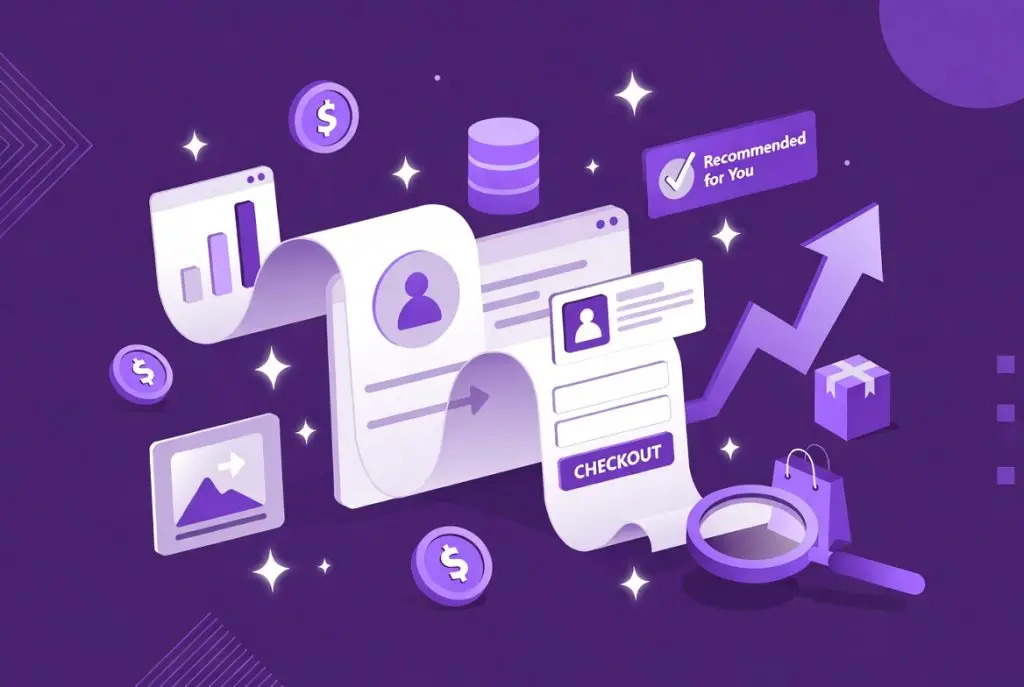
Industry insights How Data Shapes Checkout Personalization Your checkout knows more about you than you think. See how smart data is turning boring payment pages into powerful conversion machines tailored just for you. March 2025 8 min read 76% of e-commerce businesses say they’d like more control over checkout customization — yet traditional gateways keep it locked behind fees and enterprise plans.Source: Krepling Pay — merchant survey & 37,200+ checkout sessions across industries On this page The hidden costs of limited customization Why most gateways don’t allow it What you can & can’t customize How Krepling Pay does it The future of personalization Share On this page The hidden costs of limited customization Why most gateways don’t allow it What you can & can’t customize How Krepling Pay does it The future of personalization For years, e-commerce merchants have fought an uphill battle to gain more control over their checkout pages. They crave a branded checkout experience that seamlessly melds with their store’s identity — something that doesn’t just process payments but enhances brand consistency, builds customer trust, and drives loyalty. In fact, 76% of e-commerce businesses say they’d like more control over checkout customization. And they aren’t just stirring the pot for fun — they’ve got real reasons to want a checkout that’s uniquely theirs. Most importantly, it’s the final touchpoint in the customer journey: a critical moment to make a lasting impact. Yet traditional payment gateways have dug in their heels, offering merchants a frustrating ultimatum: settle for a generic, cookie-cutter checkout that feels detached from their brand, or fork over steep fees for even the simplest personalization. This has forced countless businesses into costly third-party workarounds that drain their time, resources, and patience. The hidden costs of limited customization The lack of payment-gateway personalization is a slow bleed on your bottom line. Generic checkouts carry hidden costs that compound over time. Brand dilution Even Stripe admits it — a branded checkout “increases conversion and builds customer trust.” When your payment page looks nothing like the rest of your store, that hard-won brand equity evaporates at the most important moment. Trust erosion When customers are redirected to a plain or third-party payment page that looks different, it can raise security concerns. Studies show that a significant share of shoppers abandon checkout when the page feels unfamiliar or untrustworthy. Lost loyalty Loyal customers are incredibly valuable — repeat buyers spend more and convert at far higher rates than first-timers. A disjointed checkout undermines the seamless experience that keeps them coming back. Bridging the gap Then there’s the ripple effect. Merchants often turn to third-party tools to bridge the gap, racking up subscription fees, integration costs, and maintenance headaches — paying again and again for personalization that should have been built in. 76%of businesses want more checkout customization control 64%of merchants have ditched a gateway over rigid limits +31%checkout completion with Krepling Pay’s white-label flow Why most payment gateways don’t allow customization Why is something so fundamental to e-commerce success still so elusive? The resistance from giants like Stripe, PayPal, and Adyen isn’t really arbitrary — it comes down to three things. 1. Security & compliance restrictions Payment gateways are purpose-built to handle sensitive customer data, following strict PCI DSS standards. Customization introduces risk: if a merchant modifies the checkout’s UI or injects custom code, they could disrupt the secure flow. Gateways prioritize compliance over merchant flexibility, locking down checkout to protect themselves from fines and costly breaches. 2. Existing conversion optimizations Gateways often resist giving merchants leeway because they believe their pre-set flows are already optimized — and that merchant tinkering will hurt conversions. Consider a merchant who insists on a promotional banner at checkout: it might align with their brand, but if it distracts users or slows load times, abandonment climbs. So gateways keep control to protect their benchmarks. 3. Customization as a cash grab For many gateways, personalization isn’t impossible — it’s just expensive. Custom checkout is dangled as a premium feature locked behind enterprise plans and developer resources. These costs are prohibitive for small to mid-sized businesses, effectively shutting them out of personalization altogether. 64% of merchants have ditched a payment provider over exactly these kinds of rigid limits. What you can customize — and where the limits are Payment giants toss merchants a few customization crusts to keep them happy, but they all prioritize security by limiting structural changes. You can add some branding, but you can’t touch the layout. Common customizations Aspect What you can do Examples Branding Add logos, colors, and fonts to match your store’s style. Stripe matches site themes; Shopify adds background images. Payment methods Enable or disable methods like PayPal or Klarna based on your customers’ needs. Available for all major providers. Custom fields Add limited inputs for extra information. Stripe allows three fields (e.g., delivery notes); Adyen uses API for order notes. Language Set or auto-detect languages for the checkout. Shopify offers 20+ options; Adyen supports 40+ translations. Policies & info Include return policies or contact details. Add refund terms with Shopify. Common limitations Aspect What you can’t do Examples Branding Fully remove the provider’s branding from the checkout. “Powered by Shopify” or Adyen’s hints stick around. Payment methods Determine the order in which payment methods appear. Decided by the provider’s algorithm. Custom fields Custom inputs are capped. Stripe limits to three fields; no SSNs allowed. Layout Rearrange fields or buttons in prebuilt checkouts. All major providers lock layout control. Access level Get deep customization without premium plans or coding skills. Shopify Plus or Adyen’s API is needed for more control. How Krepling Pay allows full customization — without the drawbacks Most payment gateways box you in. Krepling Pay is different: it hands you a checkout you can totally customize and make your own. Krepling Pay offers a fully white-labeled checkout experience without any extra fees or pricey enterprise plans. Merchants can customize colors, fonts, logos, and layouts to match their store perfectly, creating a cohesive journey from
The Hidden Frictions In Your Checkout
Think your checkout is smooth? Hidden frictions—like redirects, poor mobile UX, and confusing flows—are quietly driving customers away before they ever click “Pay.”
The Invisible Checkout: A Retail Revolution

The future of checkout The Invisible Checkout: A Retail Revolution No forms. No clicks. No waiting. Dive into the seamless payment experience that’s rewriting how we shop online and in-store. March 2025 8 min read 83% Cart abandonment on mobile — versus 74% on desktop. As mobile drives two-thirds of online purchases, clunky checkout is where revenue quietly leaks away.Source: Salesforce Shopping Index · Baymard Institute · Statista — checkout & mobile-commerce data On this page The state of e-commerce checkout What makes a checkout ‘invisible’ Seamless payments, accelerated growth The power of one-click The future of conversion Turn friction into growth Share On this page The state of e-commerce checkout What makes a checkout ‘invisible’ Seamless payments, accelerated growth The power of one-click The future of conversion Turn friction into growth Every abandoned cart represents more than lost revenue. It’s wasted marketing spend and a missed opportunity to build lasting customer relationships. For e-commerce businesses, the checkout process is the critical bottleneck where customer intent meets friction — and too often, that friction wins. Development teams struggle with complex integrations, while business owners watch their conversion rates suffer from outdated payment flows that fail to meet modern customer expectations. The data tells a compelling story about where traditional checkouts fall short. Cart abandonment reaches 83% on mobile devices, while desktop experiences a marginally better rate of 74%. Businesses need a pre-built checkout solution that seamlessly accepts payments while integrating with their existing tech stack. Frictionless payments: the future of checkout The emergence of ‘invisible checkout’ technology significantly shifts how online businesses approach payment processing. This evolution is about creating a personalized, shopper-friendly checkout experience that actively works to minimize friction and maximize conversions. With digital wallet transactions projected to grow at a 15% CAGR between 2023 and 2027, the market is clearly moving toward more streamlined payment solutions. This represents an opportunity for online businesses to boost revenue through optimized checkout flows, lower transaction fees, and increased customer satisfaction. The question isn’t whether to adapt to this change — it’s how quickly businesses can implement solutions that transform their checkout from a point of friction to a growth driver. 83%cart abandonment on mobile (74% on desktop) 11.3form fields in the average 5.1-step checkout 15%projected CAGR of digital-wallet transactions, 2023–2027 The state of e-commerce checkout The modern checkout process has become unnecessarily complex. The average checkout flow contains 5.1 steps and requires customers to navigate 11.3 form fields — each an opportunity for frustration, error, or abandonment. This complexity actively drives customers away from completing their purchases. In recent studies, 48% of customers cite unexpected costs as their reason for abandoning, while 26% leave when forced to create an account. Perhaps most tellingly, 22% of U.S. online shoppers have abandoned purchases solely because the checkout was “too long or complicated.” These statistics represent revenue leaking from your business with every incomplete transaction. Is your mobile checkout a conversion killer? Now responsible for nearly two-thirds of all online purchases, mobile commerce amplifies these challenges. Traditional checkout flows, often designed for desktop first, create friction on mobile devices where typing is harder and screen space is limited. For businesses, these checkout failures cascade into bigger problems: Marketing budgets are wasted when interested customers can’t complete their purchase Customer acquisition costs increase as repeat-business opportunities are lost Development resources are drained maintaining complex payment infrastructure Customer trust erodes with every frustrating checkout experience The challenge isn’t just simplifying the process — it’s fundamentally rethinking how customers complete purchases in a digital-first world. Modern businesses need a checkout solution that: Minimizes required input fields without sacrificing necessary information Works seamlessly across all devices and platforms Maintains robust security while reducing friction Integrates easily with existing business systems This is where the concept of invisible checkout enters the picture — it promises to transform the traditional payment flow into something so seamless it feels almost invisible to the customer. What makes a checkout ‘invisible’? Traditional checkout flows, with their maze of form fields and multiple steps, are giving way to intelligent systems that prioritize speed and simplicity without sacrificing security or functionality. An invisible checkout makes the payment process so effortless customers barely notice it’s happening. This approach combines several key innovations: Smart form technology that auto-populates customer information Intelligent field validation that catches errors before they happen Adaptive checkout flows that adjust to customer behavior Stored payment credentials for returning customers Digital wallet integration for one-tap payments When checkout friction disappears, business metrics improve. Krepling Pay’s pre-built checkout is designed to boost store performance through: Lower transaction fees that integrate with your tech stack Real-time transaction monitoring through the merchant dashboard Streamlined operations with instant notifications One-click refund and chargeback processing Built-in security and compliance standards Seamless payments, accelerated growth For most online businesses, payment infrastructure is a constant source of anxiety. Development teams spend countless hours integrating and maintaining complex payment systems, while business owners watch their margins shrink from transaction fees and struggle to track payment issues that frustrate customers. Krepling Pay’s pre-built checkout solution transforms these challenges into opportunities. Businesses can integrate a complete solution in minutes instead of burning development resources on payment infrastructure. Rather than losing sales to complex flows, merchants can offer customers a streamlined path to purchase that works instantly across any platform. When payment operations run smoothly, businesses can focus on growth rather than maintenance. Real-time monitoring catches issues before they affect customers. Instant notifications and one-click refunds mean support teams resolve payment questions immediately instead of making customers wait. Even security and compliance — typically major headaches — become seamless background operations rather than ongoing concerns. The power of one-click payments Time is the new currency of e-commerce. Every second a customer spends at checkout increases the likelihood of abandoning their purchase. One-click checkout removes the unnecessary steps between decision and purchase. Faster checkout, happier customers Customers no longer have to fill out tedious forms or enter data repeatedly. Their payment and shipping information
Heatmaps & User Sessions: Checkout Secrets
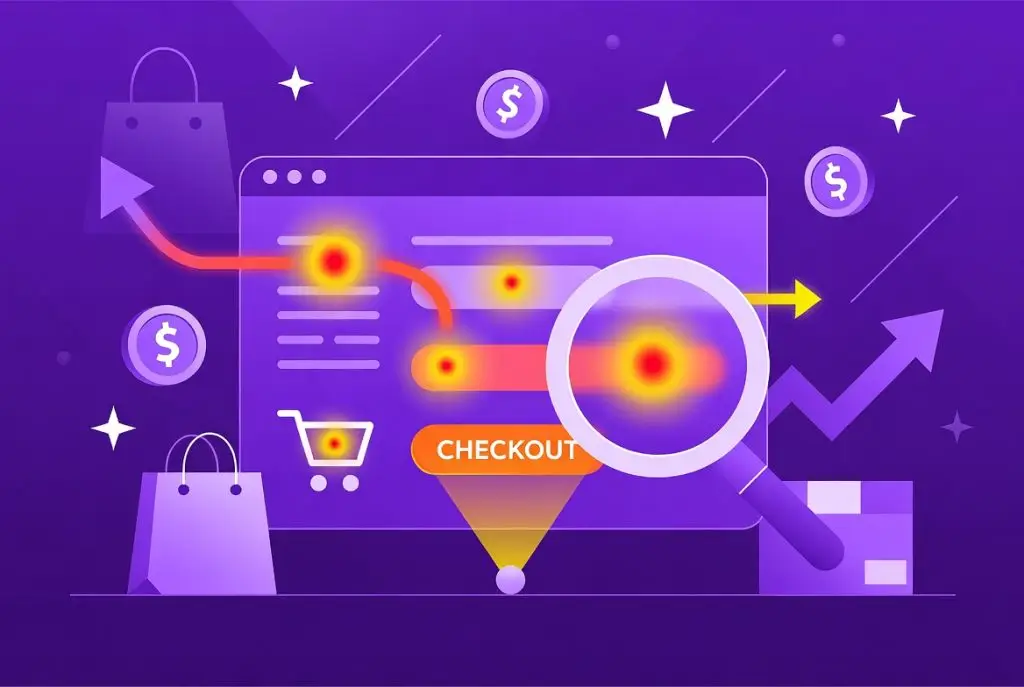
Want to know why shoppers drop off? Heatmaps and user sessions reveal the unseen clicks, scrolls, and hesitations that expose what’s really broken in your checkout.
One Click Checkout: Convenience or Risk?
One-click sounds seamless—but is it safe? Explore the trade-offs between speed and security, and why this convenience could come at a hidden cost.
Buy Now, Pay Later: A Debt Trap?
BNPL boosts sales—but at what price? Behind the easy payments lie rising defaults, hidden fees, and a growing concern: are we encouraging unsustainable spending?