Payments security
Why Tokenization in Payments is Making Card Numbers Obsolete
Still storing raw card data? Tokenization replaces sensitive numbers with secure tokens — cutting fraud, reducing PCI scope, and making old-school card storage a thing of the past.
On this page
Card numbers are fast becoming a detail of the past. With businesses facing issues like data breaches and unsecure payments, tokenization is emerging as the new norm.
Since card numbers were created decades ago, they weren’t built with today’s digital economy in mind. They now pose massive security risks that can compromise a brand’s ability to build trust with customers. While bank transfers and cryptocurrency comprise the highest amount of fraud, credit card fraud still hit Americans with $58 million in losses in 2024 — and globally, credit card fraud has reached highs of $30 billion in collective losses.
The ripple effect of a card’s lack of security is only becoming more stark. A compromised card poses short- and long-term risks — disputed payments chip away at income, while customer dissatisfaction makes it difficult to trust a brand, resulting in fewer customers and less money flowing your way. Fortunately, the future of card payments is turning toward tokenization: a technology that provides enhanced security for customers and merchants, set to change business on a foundational level.
Why traditional card numbers are becoming a security liability
Secure, contactless payment methods are starting to render cards obsolete. While some businesses and customers will still use cards occasionally, the appeal of digital wallets continues to grow. One of the biggest reasons cards are becoming a business liability is their number strings, the need for PCI compliance, and the growing demand for fast, convenient payment options.
Card numbers are easy to steal & exploit
The United States, United Kingdom, and Canada experience the highest rate of data breaches involving payment cards. Scammers use a variety of tactics — credit card skimming, phishing attacks, or online database leaks — to target people’s card numbers. Once stolen, thieves can use these card numbers anywhere, because a static number works the same regardless of where it’s entered.
PCI compliance is getting stricter
PCI compliance (short for Payment Card Industry) is a set of strict standards that keep customer card data secure and private. Merchants that fail to meet these requirements put their customers at risk — and face penalties. The card-processing ecosystem is complex, spanning everything from POS devices to online shopping apps, and the PCI DSS (Data Security Standard) is a demanding, evolving framework. Reducing how much raw card data you touch is the most reliable way to shrink that compliance burden.
The rise of tokenization: what it is & how it works
Tokenization solves the biggest security flaws of traditional card payments. Instead of storing actual card numbers, merchants store a unique, encrypted token that a customer can only use in its intended environment. Even if hackers steal a token, they cannot use it anywhere else.
How tokenization works in payments
Tokenization follows a reliable step-by-step process that addresses common security pitfalls:
- A customer enters their payment details once.
- The payment network replaces the card number with a randomly generated token.
- This token is completely useless outside the original device or merchant transaction.
- Future payments are processed using only the token — keeping the actual card number completely hidden.
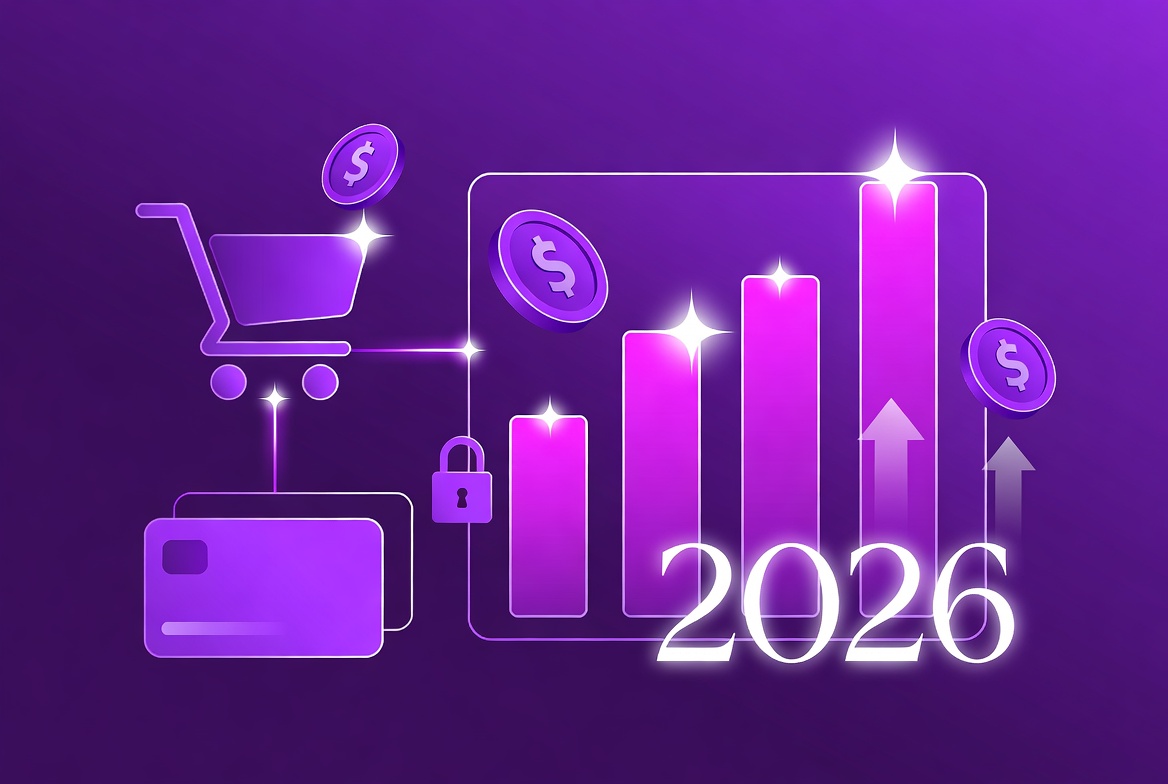
According to MarketsandMarkets, the rise in card fraud and the growing need for secure payment methods have been key drivers of tokenization’s growth — their study estimates the tokenization market will exceed $5 billion by 2026. Major processors are already seeing results: a 2024 Visa study revealed tokenized payments saved an estimated $650 million in fraud in a single year, and can reduce fraud risk by up to 60%. With leading platforms like Google Pay now depending on tokenization, real card numbers will fall out of favor even faster.
Why tokenization is the future of retail & e-commerce payments
Tokenization isn’t just a security measure — it’s the foundation of modern payment systems. It covers bases for customers and merchants alike by reducing costly fraud, chargebacks, and payment disputes. So what else does it do for the in-person and online shopping experience?
It enables frictionless, one-click payments
Digital wallets (such as Google Pay and Krepling Pay Wallet) use tokenization to allow instant, card-free transactions — no manual card entry and no passwords, just biometric authentication and a tap.
It’s far easier to stay PCI compliant
While tokenization doesn’t automatically free a business from maintaining best security practices, it dramatically simplifies the process. By never handling raw card data, merchants shrink the scope of what PCI compliance even applies to.
Eliminating card numbers reduces chargebacks & fraud
Tokenized transactions are impossible to reuse outside their intended purpose — bad news for scammers, great news for businesses. Less fraud means fewer disputed payments and chargebacks. Krepling Pay reduces chargeback fraud by up to 60% by ensuring tokens cannot be manipulated.
Omnichannel commerce is moving to tokenized systems
E-commerce, in-store POS, and even social commerce are integrating tokenized payments. Merchants using Krepling Pay’s tokenized infrastructure can accept payments across web, mobile, and IoT devices — creating a seamless, future-proof payment experience that prioritizes security without sacrificing convenience.
How Krepling Pay uses groundbreaking tokenization technology
We want businesses and customers to enjoy smooth, secure payment experiences. That’s why we’ve fully transitioned Krepling Pay to a tokenized payment system — eliminating the need for static card numbers, which means fewer credit-card risks and a flexible, faster, more secure checkout.
End-to-end tokenization for every transaction
Krepling Pay never stores raw card numbers — only encrypted tokens. Even if a scammer intercepts a customer’s data, these tokens cannot be decrypted or reused.
AI-driven tokenized fraud prevention
When you’re too busy to manually analyze user behavior, AI fills the gap. We provide real-time fraud scoring that dynamically adjusts token permissions based on behavior. For example, if an abnormal transaction is detected, Krepling Pay’s AI auto-invalidates the token before fraud occurs — a proactive approach that prevents issues before they happen.
Seamless tokenized wallets for merchants
Implementing the security benefits of tokenization has never been easier. Merchants who sign up with Krepling Pay Wallet can offer customers:
- One-click checkout with tokenized transactions
- Stored payment credentials without security risks
- Zero friction across devices (tokens work anywhere the user receives authentication)
What merchants see after switching to tokenized payments
The future of payments: beyond card numbers
Tokenization is just the beginning of a more secure buying experience. The industry is rapidly moving beyond traditional credit cards, so businesses need to pivot as soon as possible to keep pace.
Card networks are phasing out static numbers
More businesses and institutions are catching onto the security risks of cards. As a result, contactless payments — which may or may not include cards — are expected to comprise at least 40% of all card transactions in the United States by 2026. Major players like Mastercard and Visa are rolling out contactless options that replace physical card numbers with tokenized credentials.
Invisible payments & adaptive tokenization
A frictionless experience could mean the difference between a single purchase and a loyal customer. Krepling Pay continues to raise the bar with adaptive tokenization, enabling transactions to happen in the background without user input. Soon, payments will be triggered by context-based actions — such as automatic payment when a customer enters a store. Tokenization is just the start of a more efficient, secure landscape where payments become entirely invisible, eliminating friction while maintaining security standards.
Krepling Pay is paving the way for advanced tokenization
We want customers and businesses to thrive in an increasingly interconnected world. When fraud, chargebacks, and data breaches threaten everyday purchases, Krepling Pay provides a solution you can count on — convenient tokenization that eliminates common frictions in your checkout like outdated interfaces and security concerns, replacing faulty processes with single-use tokens that scammers can’t replicate.
Not only does tokenization drastically reduce card fraud and chargeback rates — we go the extra mile with adaptive tokenization that responds to user behavior. We’re paving the way for a frictionless, secure purchasing future where neither customers nor businesses have to worry about payment transactions, with fast, invisible payments that eliminate the need for tedious forms.