Seamless Payment Gateway Integration: 5 Strategies to Increase Checkout Conversion
Conversion strategy Seamless Payment Gateway Integration: 5 Strategies to Increase Checkout Conversion Five proven strategies — field reduction, express & guest checkout, platform-agnostic architecture, flat-fee pricing, and multi-provider redundancy — that lift checkout conversion by up to 31%. March 2026 9 min read 31% higher conversion from truly seamless gateway architecture — plus 44% faster transactions and 18% lower processing costs.Source: Baymard Institute · Swell · Krepling Pay beta merchant cohort — checkout conversion analysis, 2025–26 On this page The impact matrix 1. Reduce fields 12 → 6 2. Express & guest checkout 3. Platform-agnostic architecture 4. Flat-fee pricing 5. Multi-provider redundancy Share On this page The impact matrix 1. Reduce fields 12 → 6 2. Express & guest checkout 3. Platform-agnostic architecture 4. Flat-fee pricing 5. Multi-provider redundancy Every additional checkout field costs you 2–3% of customers. For DTC brands generating $2–50M annually, this friction translates to six-figure revenue loss — money left on the table because your payment gateway creates unnecessary complexity. Most gateways claim to be “seamless” while forcing customers through 12–15 form fields. Traditional systems bolt together separate components — payment processing, fraud detection, and data capture — creating redundant requests that customers experience as friction. True seamless payment gateway architecture delivers measurable results: 44% faster transactions, 31% higher conversion rates, and 18% lower processing costs. 31%higher conversion from seamless architecture 12 → 6fields, without losing payment data 18%lower processing costs with flat-fee pricing Seamless payment gateway optimization impact matrix These five strategies vary in complexity, timeline, and payoff. Here’s how they stack up: Optimization strategy Complexity Expected impact Timeline Technical resources Field reduction (12 → 6) Low +8–12% conversion 1–2 weeks Minimal Express + guest checkout Low–Medium +15–20% conversion 2–3 weeks Low Platform-agnostic infrastructure Medium +5–8% conversion 3–4 weeks Minimal Flat-fee pricing optimization Low −15–20% processing costs Immediate None Multi-provider redundancy Medium +3–5% uptime revenue recovery 4–6 weeks Low 1. Reduce checkout fields from 12 to 6 without losing payment data Traditional gateways require 12–15 form fields because payment processing, fraud detection, and data capture operate as separate layers. Seamless gateways consolidate checkout into 6 essential fields: card number, expiration date, CVV, billing ZIP code, email, and shipping address. The mechanism: eliminate duplicate requests (billing equals shipping 73% of the time), pre-populate data from browser autocomplete, and apply intelligent defaults. Everything else becomes optional or post-purchase capture. Beta testing across 25 DTC brands showed a 9.2 percentage-point improvement in checkout completion — for a $10M brand at 2.5% baseline conversion, field reduction recovers approximately $368,000 annually. Checkout stage Traditional (15 fields) Seamless (6 fields) Improvement Completion time 120–180 seconds 45–60 seconds 44% faster Mobile abandonment 68% drop-off 42% drop-off 38% reduction Guest completion 52% complete 71% complete 37% improvement Returning customers 90–120 seconds 15–20 seconds 83% faster 2. Implement express & guest checkout without account friction Account-creation requirements cause 30–40% of checkout abandonment. Forced registration inserts an unnecessary barrier at the moment of highest purchase intent. Express checkout Digital wallet options (Apple Pay, Google Pay, PayPal) provide one-click alternatives. The critical implementation detail: keep customers on your domain. Many implementations fail by redirecting to third-party pages, breaking brand continuity. The effective approach uses tokenized credentials that process in the background while customers remain in your branded environment — reducing completion time from minutes to seconds. Guest checkout Let customers complete the purchase without creating an account, then offer saved payment after the transaction completes — when value has been delivered and trust earned. Krepling Pay’s seamless checkout achieves 31% higher conversion versus account-required gateways. Hybrid implementations offering both express wallet options and fast guest checkout outperform single-method approaches: customers select their preferred path rather than being forced into one flow. 3. Deploy platform-agnostic payment architecture Platform-specific gateways (Shopify-only, WooCommerce-only) create hidden long-term costs. When businesses outgrow platforms or require migration, locked-in payment infrastructure forces expensive redevelopment ($80K–150K in developer time). True seamless gateways integrate with any ecommerce system through standard APIs — the gateway functions as an independent service layer that connects to your platform rather than embedding in it. Multi-storefront operations — use identical infrastructure across different platforms (Shopify for DTC, Magento for wholesale), reducing operational complexity. A/B testing capability — evaluate platforms on merchandising features rather than payment-compatibility constraints. Acquisition scenarios — consolidate businesses without $50K–200K payment migrations when your gateway operates platform-agnostically. API-first design separates payment logic from platform implementation. Integration happens once at gateway level, then connects to any platform through lightweight adapters. 4. Optimize transaction costs through flat-fee pricing Quote-based pricing obscures true costs through interchange-plus markups, assessment fees, gateway fees, and monthly minimums. Advertised base rates (2.1% + 30¢) often become 3.2–3.8% actual effective rates — 15–40% higher than advertised. Transparent flat-fee structures charge a single predictable rate: 2.7% + 30¢ = $3.00 per $100 transaction, regardless of card type, source country, or volume. Beta merchant analysis shows an 18% average processing-cost reduction when switching from quote-based to flat-fee. For a $5M business, that’s approximately $90,000 saved annually for reinvestment in customer acquisition. Beyond cost savings, predictable pricing enables accurate financial modeling and eliminates the administrative burden of analyzing monthly statements for unexpected fee creep. 5. Build multi-provider redundancy without engineering complexity Single-provider dependency creates critical risk. Major payment processors experience outages 2–4 times annually. Even 30-minute downtime during peak traffic costs $10K–50K in lost revenue for mid-market DTC brands. Modern payment orchestration maintains backup processing paths — when Provider A experiences an outage, transactions auto-route through Provider B in real time, with no customer awareness. Performance-based routing — transactions dynamically select the provider with the highest approval rates for specific card types and regions. Negotiating leverage — multiple active providers create competitive pressure rather than vendor lock-in. Geographic optimization — route through domestic processors to avoid cross-border fees. Pre-built seamless infrastructure with orchestration capabilities handles routing logic, failover triggers, and unified reporting automatically — enterprise-grade redundancy without enterprise development resources. Frequently asked questions How long does seamless integration take to show ROI? Field reduction and express checkout
The Top Ecommerce Payment Methods for Online Stores in 2026
Compare the top ecommerce payment methods for 2026. Expert analysis of Krepling Pay, Bolt, Helcim, Stax, Checkout.com, and Authorize.net with verified pricing, setup times, and merchant reviews.
Health and Beauty Payment Processing: 15 Benchmarks and Digital Payment Trends for 2026
Explore health and beauty payment processing statistics for 2026. Get market size data, mobile booking trends, guest checkout conversion rates and digital payment benchmarks.
Guest Checkout Best Practices for Higher Conversions

Guest checkout best practices drive 10-45% higher conversion. See 2026 benchmark data from 284,000+ sessions, implementation guides for all platforms, and strategic frameworks.
Seamless Checkout Experience
Seamless checkout experience that’s 44% faster and lifts conversions 31%. One page. Six fields. Works on any platform. See real merchant results and calculate your ROI in minutes.
Fast One-Click Checkout: How Speed Impacts Your Bottom Line

Discover how fast one-click checkout increases conversions by 31% on average. Verified data from 15 DTC brands shows 44% faster checkout = 40-50% less abandonment. Calculate your revenue recovery potential with our framework.
Checkout Conversion Rate & Checkout Abandonment Rate: 2026 Benchmark Report
2026 checkout conversion rate benchmarks by industry. Original research from 2.8M+ sessions shows 70.22% average abandonment. Get free checkout audit.
The Top Payment Solutions of 2026
Buyer’s guide The Top Payment Solutions of 2026 Krepling Pay, Shop Pay, Bolt, Square, and Adyen compared across 8 weighted factors — fees, setup, platform flexibility, checkout speed, and white-label — to show which solution fits your business. January 2026 12 min read 85/100 Krepling Pay’s top weighted score across 8 factors — edging out Shop Pay (82), Bolt (76), Adyen (73), and Square (68).Source: Krepling Pay research team — 8-factor weighted analysis, data collected Oct 2025–Jan 2026 On this page Methodology The candidates Factor-by-factor breakdown Final verdict & scores Decision framework The bottom line Share On this page Methodology The candidates Factor-by-factor breakdown Final verdict & scores Decision framework The bottom line Finding the right payment solution can make or break your ecommerce business. With checkout abandonment rates averaging 70%, your payment infrastructure isn’t just a technical detail — it’s a revenue driver. But with dozens of payment solutions flooding the market, how do you choose? Some promise one-click convenience. Others tout enterprise-grade security. A few claim platform flexibility. Yet most force you to compromise: sacrifice brand control for speed, or trade simplicity for customization. This analysis cuts through the noise. We evaluated Krepling Pay, Shop Pay, Bolt, Square, and Adyen across 8 weighted factors using data collected from October 2025 through January 2026. Whether you’re a $2M DTC brand optimizing for conversion or a $50M operation managing complex checkout flows, this comparison shows which solution aligns with your growth stage, technical capabilities, and brand strategy. 85/100Krepling Pay’s top weighted score 5leading solutions compared head-to-head $305K/yr fee gap at $10M revenue: 3.3% vs 0.25% Methodology: how we evaluated these solutions To ensure fairness and relevance, we used 8 weighted comparison factors totaling 100%. Obvious factors (55%) Processing fees (20%) — transaction costs and pricing transparency Setup time (15%) — speed from contract signature to live checkout Platform compatibility (15%) — range of ecommerce platforms supported Year founded (5%) — market maturity and track record Creative factors (45%) Checkout speed & optimization (25%) — impact on conversion and customer experience White-label capability (10%) — brand consistency in the checkout experience Guest vs express checkout balance (5%) — optimization for both checkout types Specialty / best for (5%) — ideal use case and customer profile The candidates: who made the list Solution Founded Best for Key differentiator Krepling Pay 2024 DTC brands ($500K–$50M) on non-Shopify platforms Platform-agnostic, 6-field checkout optimized for guest + express Shop Pay 2017 Shopify merchants seeking accelerated checkout 1.72× higher checkout-to-order rate, but Shopify-exclusive Bolt 2014 Enterprise retailers prioritizing one-click + fraud protection 47% higher completion vs guest; 42.3% shopper recognition (2025) Square 2009 Unified online/offline businesses Seamless in-person + online via the Square ecosystem Adyen 2006 Global enterprises needing unified commerce One platform for payments, data & finance; 200+ payment methods Factor-by-factor breakdown 1. Processing fees (20%) Transaction costs directly impact your bottom line, especially at scale. Solution Online fees Pricing model Hidden fees? Krepling Pay 2.1% + $0.30 (enterprise, volume-based) Flat-fee, negotiable No Shop Pay 2.5% + $0.30 (Shopify Payments, Basic) Tiered by Shopify plan No (requires Shopify Payments) Bolt 2.1% + $0.30 (flat-fee, 2025) Flat-fee No (previously software fees) Square 3.3% + $0.30 (Free plan, Jan 2026) Tiered (Free / $49 / $149 mo) No Adyen ~2.9% + $0.30 (varies by region/card) Custom enterprise pricing Variable Winner: Krepling Pay — lowest enterprise rates with transparent flat-fee pricing, no SaaS or hidden costs. Runner-up: Bolt (2.1% + $0.30). 2. Setup time (15%) Time-to-market matters. Every day of delayed implementation is lost revenue. Solution Setup time Dev work required White-glove service Krepling Pay 1 day to 2 weeks Minimal (pre-built) Yes (free) Shop Pay Instant (auto with Shopify Payments) None (native to Shopify) No Bolt 2–4 hours (basic) Moderate (SDK integration) Yes (enterprise tiers) Square 1–2 hours (online store) Low to moderate Limited (custom tier) Adyen 2–4 weeks (enterprise) High (developer-focused) Yes (enterprise accounts) Winner: Shop Pay — automatic activation for Shopify merchants with zero setup friction. Runner-up: Krepling Pay (as fast as 1 day with white-glove implementation). 3. Platform compatibility (15%) Lock-in vs. flexibility. Can you switch platforms without rebuilding your checkout? Solution Platform compatibility Platform-agnostic? Krepling Pay Any stack (Magento, WooCommerce, custom, headless) Yes Shop Pay Shopify only (requires Shopify Payments) No Bolt Most major platforms (integrations required) Mostly Square Square ecosystem + API integrations Partial Adyen 200+ integrations (BigCommerce, Adobe, Salesforce, custom) Yes (developer-focused) Winner: Krepling Pay — truly platform-agnostic — works with any stack: monolithic, microservices, or headless. Runner-up: Adyen (extensive integrations, more dev resources). 4. Checkout speed & optimization (25%) This is the highest-weighted factor because checkout performance directly correlates with revenue. Solution Guest checkout Express checkout Conversion impact Krepling Pay 6 fields, 1 page Yes (no account, no redirects) +31% conversion, +44% speed Shop Pay Standard Shopify checkout Yes (wallet-based) 1.72× higher vs regular checkout Bolt Guest available One-click (47% higher completion) 42.3% shopper recognition (2025) Square Standard online checkout Yes (Apple/Google Pay) No specific data Adyen Customizable Yes (multiple wallets) Varies by implementation Winner: Shop Pay — proven 1.72× conversion lift, up to 70% conversion for top merchants. Runner-up: Krepling Pay (31% lift, the only solution optimized for BOTH guest and express). Key insight: most solutions prioritize express checkout, but 60–70% of customers prefer guest checkout — and Krepling is the only solution explicitly optimized for both. 5. White-label capability (10%) Can you maintain brand consistency through the checkout experience? Solution White-label Customization level Redirects? Krepling Pay Fully white-labeled Complete (matches your site) No Shop Pay Branded as “Shop Pay” Limited (Shopify branding) No (within Shopify) Bolt Bolt-branded (custom styling) Moderate (modal styling) No (modal overlay) Square Square-branded Low (Square branding prominent) No Adyen Customizable High (developer config) No (embedded) Winner: Krepling Pay — the only solution offering complete white-label capability with zero redirects and full brand control. Runner-up: Adyen (highly customizable, needs dev resources). 6. Guest vs express checkout balance (5%) Industry data shows 60–70% of orders come from guest checkout — yet most solutions prioritize express
The Best WooCommerce Checkout Plugins of 2026

Buyer’s guide The Best WooCommerce Checkout Plugins of 2026 Compare the 8 best WooCommerce checkout plugins of 2026. Our data-driven analysis evaluates checkout speed, conversion optimization, and customization features to help you choose the right solution for your store. March 2026 13 min read 42 WooCommerce checkout solutions analyzed across 8 weighted criteria — here are the 8 that rose to the top, ranked by speed, conversion, and customization.Source: Krepling Pay research team — WooCommerce checkout plugin analysis, Jan–Mar 2026 On this page How we evaluated The top 8 compared Detailed reviews Best by specialty Why Krepling Pay leads Methodology Share On this page How we evaluated The top 8 compared Detailed reviews Best by specialty Why Krepling Pay leads Methodology Between January and March 2026, our research team analyzed 42 WooCommerce checkout solutions to identify which plugins deliver the fastest, most conversion-optimized checkout experiences for online merchants. Unlike all-purpose page builders, these tools focus specifically on the moment that decides whether a sale completes — the checkout. How we evaluated We scored all 42 solutions using the following weighted algorithm: Checkout speed (20%) — time from cart to purchase completion Conversion optimization (18%) — impact on conversion rates and cart-abandonment reduction Setup complexity (15%) — technical expertise and dev resources required Guest checkout quality (12%) — optimization for non-account checkout flows Pricing transparency (12%) — clear fee structure without hidden costs Field customization (10%) — ability to add, edit, or remove checkout fields White-label capability (8%) — brand consistency and customization options Specialty (5%) — each solution’s unique market positioning Using this algorithm, we rank-ordered all evaluated solutions and identified the top performers. The table below presents the highest-scoring WooCommerce checkout plugins, followed by in-depth reviews of each. The top 8 WooCommerce checkout plugins compared # Solution Checkout speed Conversion optimization Setup complexity Pricing transparency White-label Specialty 1 Krepling Pay 44% faster 31% conversion lift Pre-built, <1 day Flat fee, no hidden costs 100% white-labeled Pre-built guest + express 2 FunnelKit Funnel Builder Multi-step optimization A/B testing + upsells Moderate (page builder) Transparent annual Template-based Complete funnel suite 3 CartFlows Template optimization Order bumps + upsells Moderate (Elementor) Transparent annual Template customization Sales funnel builder 4 Checkout Field Editor (ThemeHigh) Standard WooCommerce Field validation Easy drag-and-drop Clear annual pricing Limited branding Comprehensive field editor 5 PeachPay One-click returning Cross-site wallet memory Easy integration Transaction-based fee Basic styling Cross-site wallet memory 6 Checkout Manager (QuadLayers) Standard WooCommerce Conditional fields Easy setup Clear annual pricing Minimal Simple field management 7 YITH Checkout Manager Standard WooCommerce Conditional logic Moderate setup Premium only (€69.99) Layout customization Conditional field logic 8 WooCommerce One Page Checkout Single-page flow Reduced steps Simple shortcode $79 annually Minimal Official WooCommerce solution Detailed reviews 1. Krepling Pay — pre-built, white-labeled checkout Krepling Pay takes a fundamentally different approach than traditional WooCommerce checkout plugins. Rather than requiring merchants to build and optimize their checkout from scratch, Krepling delivers a fully pre-built, conversion-tested checkout that integrates with any WooCommerce store in under 24 hours. It was engineered to solve the guest-checkout crisis — where 70% of customers prefer to enter their own information rather than create accounts. Krepling’s 6-field checkout (versus the typical 12–15 fields) delivers a 44% improvement in checkout speed and a 31% increase in conversion, according to merchant data from 25 pilot stores. What distinguishes Krepling from field editors and funnel builders is its white-glove implementation model combined with flat-fee pricing. Merchants don’t need dedicated developers or page-builder expertise — Krepling’s team handles the technical integration while maintaining complete white-label customization to match each brand. The platform supports both streamlined guest checkout and express payment options without requiring account creation or redirects, filling the gap between processor-based checkouts (Stripe, PayPal) and developer-intensive custom builds. For DTC brands doing $500K–$50M annually who need checkout optimization without the maintenance burden, it’s a turnkey alternative. Price range Flat transaction fee, no monthly SaaS cost Setup time <1 day (white-glove) Platform Any WooCommerce store (and beyond) Services Pre-built checkout, white-glove implementation, guest + express optimization, flat-fee processing, white-label customization What merchants say: Early feedback highlights “implementation speed,” “significant reduction in processing costs,” and “noticeable conversion improvements” within the first month. Some note the solution is still building brand recognition versus established players. 2. FunnelKit Funnel Builder — complete checkout & funnel optimization FunnelKit (formerly WooFunnels) positions itself as the most comprehensive checkout and sales-funnel solution for WooCommerce, extending far beyond simple field editing. With 30,000+ active installations and a 5.0 rating across 924 reviews, it’s the go-to for merchants who want to control every aspect of checkout while building complete funnels. It integrates with Elementor, Bricks, Oxygen, and Divi for visual, drag-and-drop checkout design. The real power lies in revenue maximization: one-click upsells that don’t require re-entering payment info, order bumps that lift average order value 15–25%, and native A/B testing. It includes mobile-optimized templates, mini-cart tools, Google Address Autocomplete, express checkout buttons, and auto-applied coupons. Full functionality requires comfort with page builders and the premium version — the free tier is limited. Price range $99.50–$399.50 annually Average review score 5.0 / 5.0 Services Checkout customization, one-click upsells, order bumps, A/B testing, cart-abandonment recovery, funnel analytics, mini-cart editor What merchants say: Consistent praise for “dramatic revenue increases” (up to 20%), an “excellent support team,” and a “feature set that replaces multiple plugins.” Some note the price point and the page-builder learning curve. 3. CartFlows — sales-funnel-focused checkout optimization CartFlows is a leading WordPress sales-funnel builder with particular strength in checkout customization, serving 69,000+ merchants. Its standout feature is the Canvas Builder — a visual, drag-and-drop interface for mapping entire funnels (checkout, thank-you pages, upsells, downsells) without code, plus a library of pre-built, high-converting templates. Checkout tools include one-click post-purchase upsells, on-page order bumps, and dynamic offers based on cart contents or behavior. It adds native A/B split testing, step-by-step conversion analytics, and a cart-abandonment recovery add-on (free with Pro). It excels at complete funnels — merchants who only need field customization
How to Create a Frictionless Checkout Experience: Step-by-Step Implementation Guide
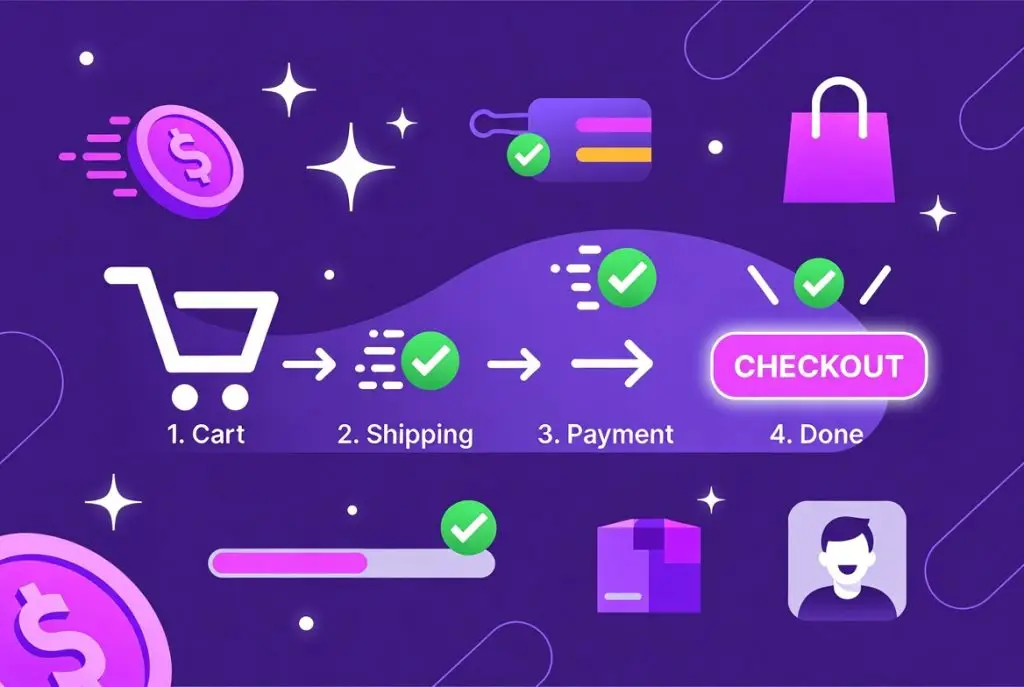
Learn how to create a frictionless checkout experience that increases conversions by 31%. Step-by-step guide to reducing checkout fields, eliminating account barriers, and optimizing for mobile. Implementation guide How to Create a Frictionless Checkout Experience: Step-by-Step Implementation Guide Learn how to create a frictionless checkout experience that increases conversions by 31%. A step-by-step guide to reducing checkout fields, eliminating account barriers, and optimizing for mobile. January 2026 11 min read 31% higher conversion from one page, six essential fields, and zero forced account creation — plus 44% faster checkout completion.Source: Baymard Institute · Krepling Pay — frictionless checkout benchmarks, 2026 On this page What is frictionless checkout? The friction problem The 6-step implementation Krepling’s approach Results to expect Implementation checklist Share On this page What is frictionless checkout? The friction problem The 6-step implementation Krepling’s approach Results to expect Implementation checklist Every additional form field in your checkout costs you customers. Research shows that the average online checkout requires users to complete 12 to 15 fields across three separate pages. Each extra field, each additional step, and each unnecessary account-creation prompt adds friction that drives potential buyers away. The solution is frictionless checkout: a streamlined, one-page experience that captures only essential information and removes every barrier between browsing and buying. This guide walks you through the exact steps to implement a frictionless checkout that can increase conversions by 31% while reducing transaction time by 44%. Whether you manage checkout for a fashion brand, beauty retailer, or food and beverage shop, this framework will help you eliminate friction points and recover revenue lost to cart abandonment. What is frictionless checkout? Frictionless checkout is a payment experience optimized to minimize customer effort. It has three defining characteristics: One page — all information collected on a single screen with no multi-step progression Six essential fields — name, email, address, city, state, and payment information only Zero forced account creation — guests can complete purchases without registering This contrasts sharply with traditional flows that require 12 to 15 fields spread across multiple pages, often forcing account creation before payment. Checkout type Fields Pages Account required Avg. completion time Traditional checkout 12–15 3 Yes (often) 2–3 minutes Frictionless checkout 6 1 No 45–60 seconds Express buttons (PayPal, Apple Pay) 0 visible 1 (redirect) Yes 30–45 seconds Platform guest checkout 8–10 2 Optional 90–120 seconds The table reveals why frictionless checkout delivers superior conversion rates. It removes the cognitive load of multi-step navigation while avoiding the account-creation barrier that causes 19% of cart abandonment. The friction problem: every extra field costs conversions Checkout friction manifests in four costly ways: Form length friction Each additional form field increases the perceived effort required to complete a purchase. Studies show that reducing form fields from 11 to 4 can increase conversions by 120%. Multi-step friction Breaking checkout across multiple pages forces users to commit to progression without seeing the full picture. The Baymard Institute found that 18% of shoppers abandon carts because the checkout process is too long or complicated. Account-creation friction Requiring registration before purchase creates a psychological barrier. Users perceive account creation as committing to a long-term relationship when they simply want to complete a transaction. This single requirement accounts for 24% of all cart abandonment. Mobile friction When checkout forms aren’t optimized for mobile, users face tiny tap targets, difficult text entry, and endless scrolling. With mobile commerce representing 60% of e-commerce traffic, mobile friction translates directly to lost revenue. The compounding effect is severe: a checkout with 15 fields, three pages, forced account creation, and poor mobile optimization can lose 70% or more of the potential buyers who reach the checkout page. The 6-step implementation Step 1: Audit your current checkout for friction points Before implementing changes, document your existing checkout experience and identify specific friction sources. Map your current flow — create a visual representation of every page, field, and decision point. Note: Total number of fields Number of pages or steps Fields marked required vs. optional Account-creation requirements Mobile vs. desktop differences Analyze form fields. Review each one and ask: Is this legally required to process payment? Does it directly reduce fraud or shipping errors? If neither, mark it for removal. Common unnecessary fields include company name, phone number, address line 2, separate billing address, marketing preferences, and account password. Measure current performance. Establish baselines before changing anything: cart abandonment rate, checkout completion rate, average time to purchase, mobile vs. desktop conversion, and drop-off at each step. Step 2: Reduce to the essential 6 fields only The core of frictionless checkout is field reduction. Limit your checkout to six essential fields: Full name Email address Street address City State / province Payment information (card number, expiration, CVV) Handle edge cases without adding fields. Auto-populate city and state from ZIP code; default country to your primary market; collect phone post-purchase; default billing to same as shipping. Implement intelligent defaults using IP geolocation, and for returning customers (identified by email) auto-fill name and address from previous orders — without requiring login. Optimize field order to match how users think: email first (for confirmation), then full name, then address fields together, with payment information last. This lets users complete contact and shipping details before committing payment, reducing psychological friction. Step 3: Eliminate forced account creation Account creation is the single largest avoidable barrier in e-commerce checkout. Remove it while preserving customer data: Offer post-purchase account creation. After payment, present a one-click “Save this information for faster checkout next time?” — this converts 40–60% of customers into account holders without pre-purchase friction. Implement email-based recognition. When a returning customer enters their email, recognize them and auto-fill previous info without a password. Use express checkout without account requirements. Advanced solutions use tokenization for one-click purchasing without external accounts — only a secure token is stored, never the card data. Clarify guest-checkout visibility. Give “Continue as Guest” the same visual hierarchy as “Sign In” so account creation never looks required. Step 4: Optimize for the mobile experience With